THE SHORT ANSWER
Use the couple’s invitation first: dress code, venue, time and cultural or ceremony guidance. Then compare complete looks with shoes, bag and a layer. For an outdoor celebration, test the shoes on the ground you expect. Choose the option that follows the brief and lets you enjoy the day.
Read the whole invitation
Start with the couple’s stated dress code, venue, time and any cultural or ceremony guidance they provide. If a requirement is unclear, ask the hosts or a person they have nominated. An AI comparison cannot replace those instructions.
Write down the constraints that affect your choice: outdoor ceremony, indoor reception, grass or gravel underfoot, an evening temperature change, or a layer needed for part of the day. They can make the decision much easier than a vague idea of what a wedding outfit should be.
Compare complete looks
Put together each outfit with the shoes, bag and layer you plan to use. A dress or suit photographed alone is only part of the choice. Check that you can sit, walk and move comfortably in each complete look.
If the event includes uneven ground, try the shoes on a similar surface before deciding. Keep practical questions separate from the image review: a photo may show a shoe’s shape, but it cannot verify comfort or grip.
Give the tool the actual brief
A useful brief might be: “Wedding guest, outdoor ceremony followed by dinner indoors. The invitation says cocktail attire. I want a polished look, and these are the two options I own.” Include any explicit instructions about colors or coverage.
Use the recommendation as another perspective on the outfit. If it conflicts with the invitation or with something the hosts have told you, follow the hosts. The most useful adjustment is often a single accessory or layer, rather than buying an entirely new look.
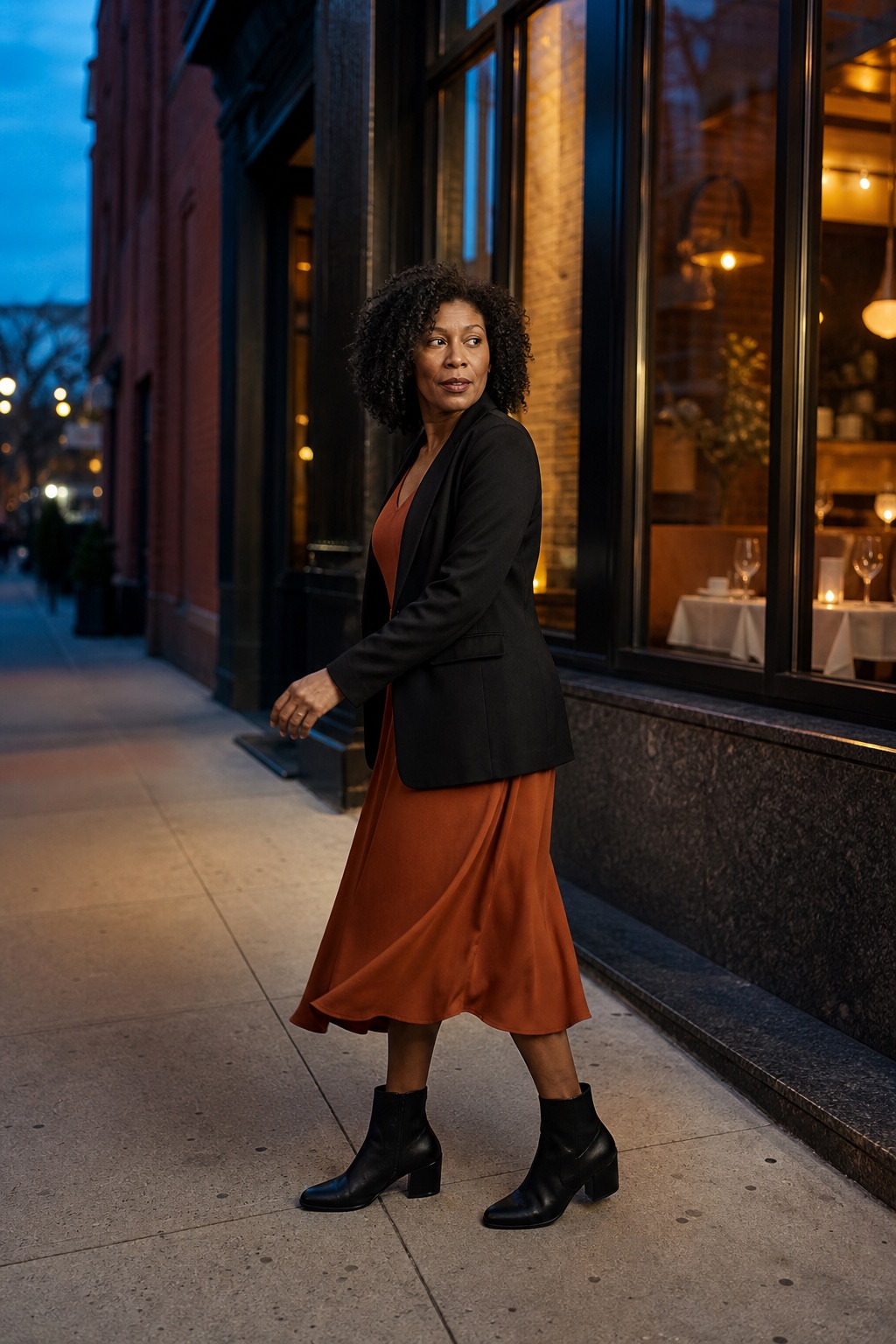
These original AI-assisted notes offer practical styling suggestions. The editorial images are generated illustrations of style, not photographs of an event or a personal styling consultation. Your comfort, preferences and the host’s instructions come first.